
AI Hentai Comics in 2026: The Quick Answer
Static hentai comic panels haven't moved since about 2020, and meanwhile GoLove's characters answer you mid-scene — no page turn required. That's the whole verdict, no cap. Most "ai hentai comics" tools hand you a panel set where the girl's face mutates between frames, and GoLove.ai wins here precisely because it stopped pretending to be a comic: you chat, you ask her for a photo, she sends one that still looks like her, and you can push that photo into a short video.
The anime roster is where this lands hardest. Rosehip is the tsundere who needs three messages before she'll admit she likes you, Atalanta plays kuudere until she suddenly doesn't, and Letty... yeah, Letty's yandere calm is a whole mood.
Characters Worth Trying
Tap any character to start a chat


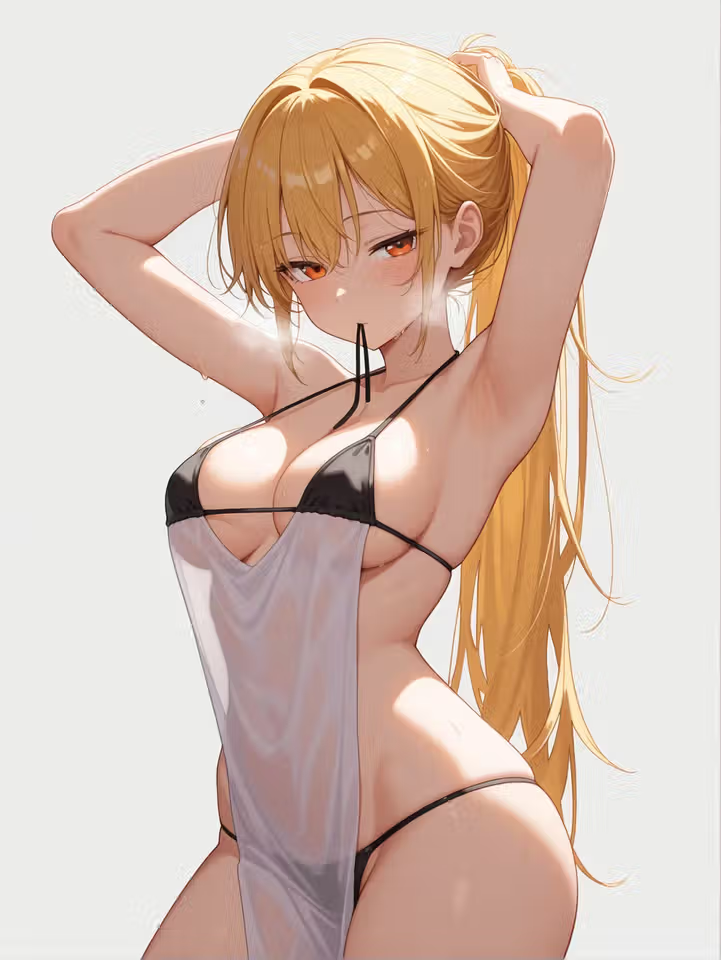
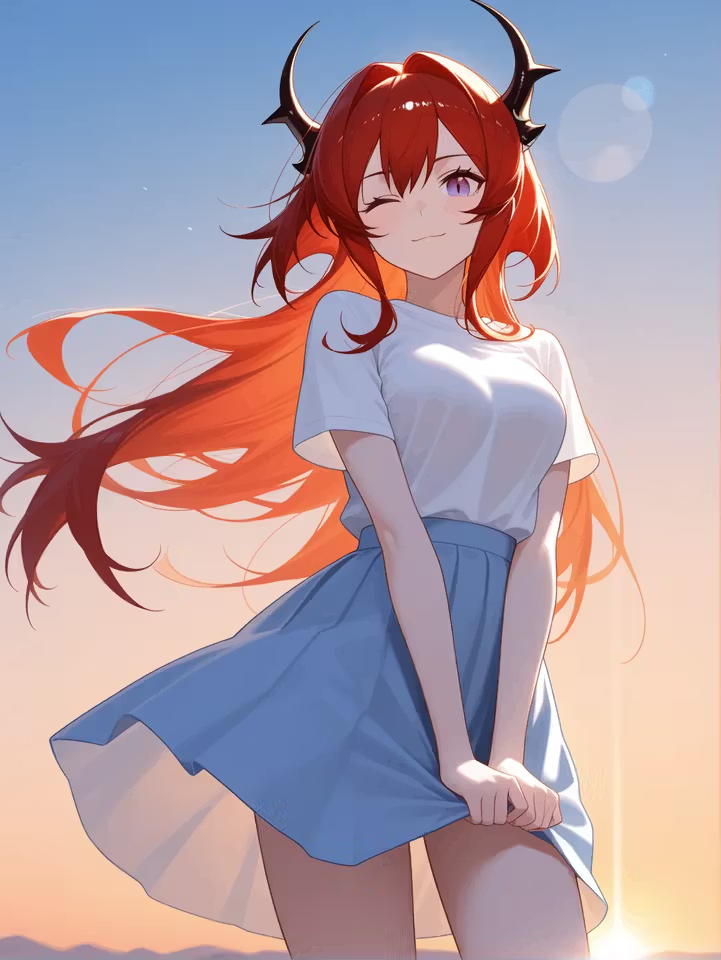
Every one of those opens straight into chat — no signup wall, no email, no render queue to sit in. Pick one now, while today's free Stars are still sitting there unspent.
What Most "AI Hentai Comics" Tools Actually Give You
Search "ai hentai comic maker" and three flavors come back at you: prompt-to-panel generators that stitch 4–6 images into a grid, static image sets someone already rendered and dumped on a gallery site, and Patreon-gated comic pages where the "AI" part is 20% generation and 80% a human fixing hands in Photoshop. None of these are bad, exactly. They're just... finished. Downloaded. Over.
The honest split:
- Novelty is real — a decent nsfw ai comic generator can produce a wild panel in under a minute, and free tiers exist.
- Consistency is where it collapses. Panel one: silver twintails, mole under the left eye. Panel four: different jawline, different eye color, mole gone. Your best girl became her own cousin.
- Continuity doesn't exist at all. There's no memory between generations, so the "story" is whatever you narrate in your head.
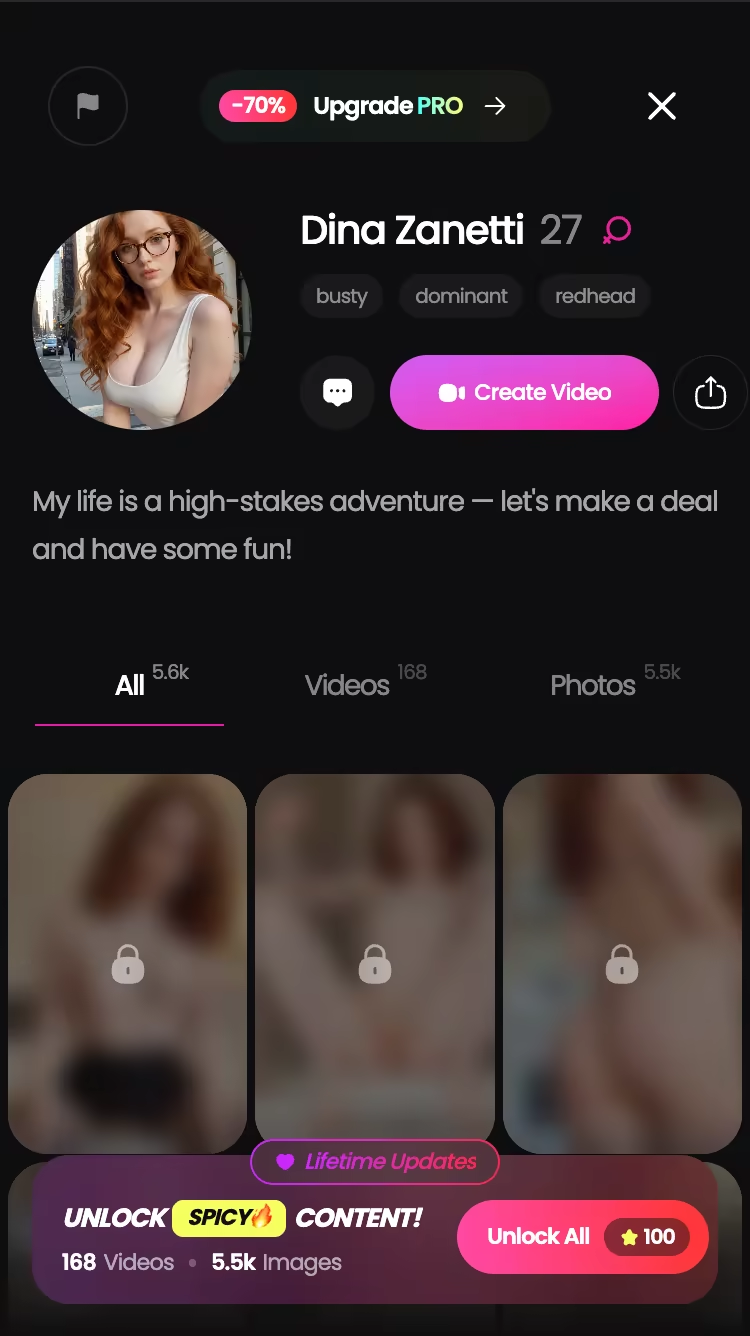
Now compare that to the AI hentai chat experience I tested — same anime energy, except the character persists. That's the fork in the road: a one-off download, or something that remembers what happened last night. Which one are you actually reopening tomorrow?
Inside GoLove: From Chat to Photo to Video
Step one takes about eight seconds. You tap a character from Explore, the anonAuth entry drops you straight into the chat window, and you're typing. No verification email, no "confirm you're 18" quiz spread across four screens. For a category where half the tools want your card before you've seen a single output, that alone is a W.
Step two is the part comic generators can't do. Mid-conversation — she's teasing you about something you said, the scene's already warm — you just ask for a photo. Request Photos in Chat is a 2026 feature and it's the one that fixed the consistency problem for me. The image comes back as her: same face, same hair, same character, dropped into whatever the conversation was doing. Not a fresh roll of the dice, not a stranger who vaguely matches your prompt. Behind it sits the same generator you get on the Generate tab — 35 realistic picture poses, 21 outfits, 34 backgrounds, batches of 2, 4, or 8 — plus the anime picture set with the hentai-only modes (tentacle, ahegao, paizuri, stomach bulge) if you're on an anime girl.
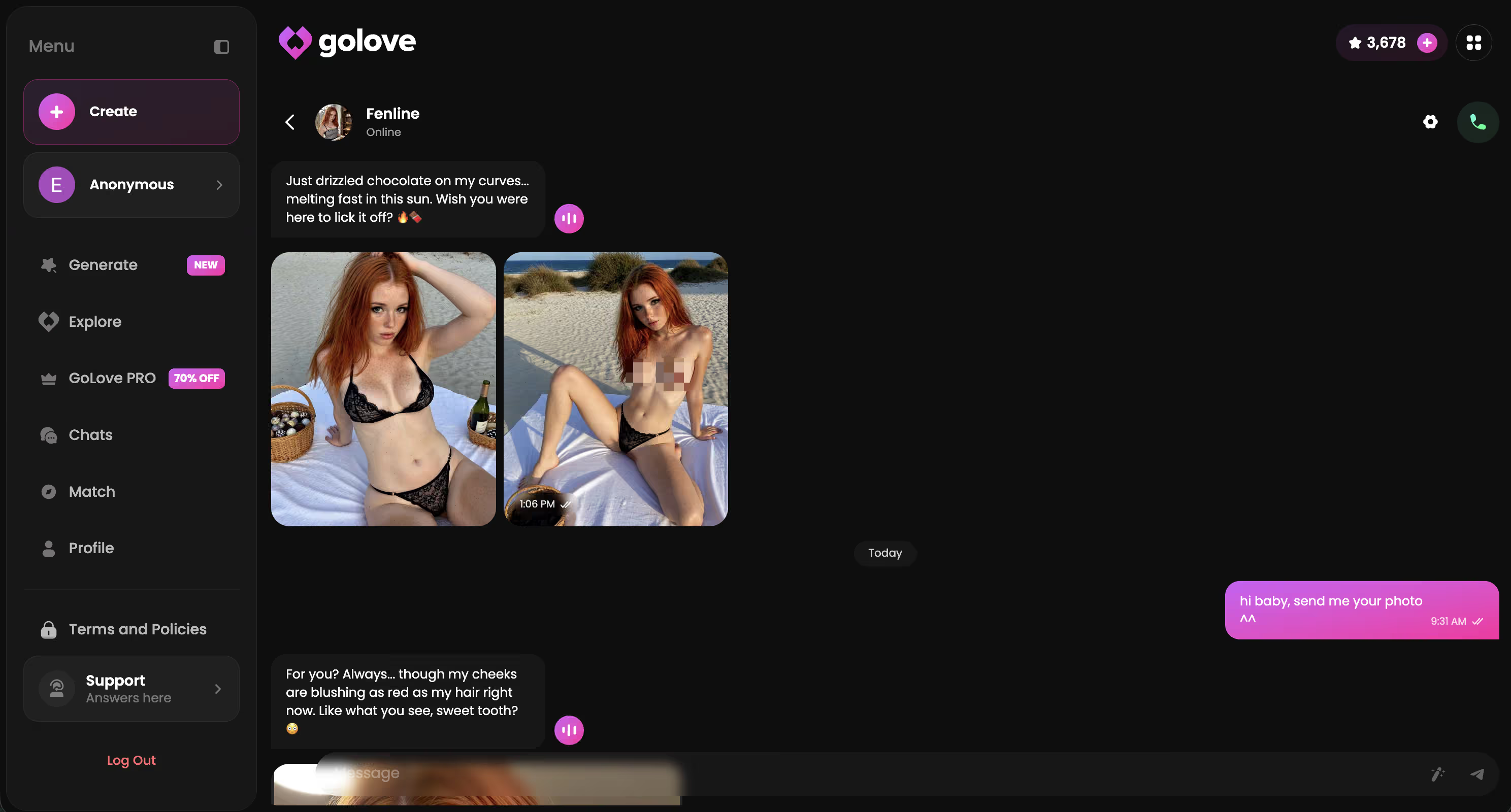
Step three: that photo doesn't have to stay a photo. Generate Video from Photo lives right there in chat — pick an action from the Select Action modal, tap generate, and the still becomes a clip. Panel one becomes a moving scene. You know that feeling when a manga chapter you've read six times finally gets animated? Same dopamine, roughly ninety seconds of waiting.
GoLove Pricing vs What Comic Generators Actually Cost
Here's the part every ranking page skips. Comic-generator pricing is usually "free trial, then credits," where credits vanish per render and nothing you paid for follows you anywhere. GoLove runs on a subscription plus Stars — and you can genuinely start at zero, because chat entry is free and 2 free Stars land in your account every day just for showing up.
| | Typical AI hentai comic tool | GoLove.ai (checked 2026‑07‑19) |
|---|---|---| | Entry | Free trial, then credit packs | Free chat via anonAuth + 2 free Stars daily | | Monthly | Varies, often credit-metered | GoLove PRO ~$19.99/mo (approx; varies by region — ~$12.99 in some geos — and by promo) | | Annual | Rarely offered | ~$119.88/yr (~$9.99/mo), cheapest per month | | Top-ups | Credits per render | Star packs ~$9.99 → ~$179.99 | | Character consistency | Breaks panel to panel | Same character, every request |
What that buys in practice:
- PRO unlocks the unlimited Feed plus its style/gender/age filters (free tier gets a limited number of new clips per day).
- Stars are the flexible lane — spend on generations, or unlock a character's whole library, some of which run to hundreds of videos.
- Promos are frequent; I've seen a −70% upgrade banner. Prices move, so check the header before you commit.
Annual works out around ten bucks a month for a character who remembers you — less than one Patreon comic tier, and it's the number I use in how I rank the anime AI companions. If a promo banner is up right now, that's the moment to grab it.
GoLove's Video Generator Isn't a Multi-Panel Comic Tool
Straight up: if what you want is a downloadable comic page — sequential panels, gutters, speech bubbles, export to PDF or CBZ — GoLove does not do that. No panel layout editor. No "arrange 6 frames into a page" button anywhere. The generator is built around one scene at a time: pick an action preset, clothes, background, hit Generate. For a comic purist that's an L, and I'm not going to dress it up.

The scene library is genuinely deep, though — 76 realistic video modes, 20 anime, 35 trans, 16 anime-trans, 147 total, with one-tap presets like Hard Doggy Style, Ahegao, Tentacle or Shibari Swing. But deep ≠ sequential. You're building a moment, not a chapter.
Does that kill the recommendation? Nah, it reframes it. A comic is a fixed sequence you consume once; GoLove is a character you keep. If your actual goal was "a hentai comic file on my drive," use a panel generator and accept the face drift. If your goal was the feeling a good doujin gives you... this is closer.
What I Couldn't Test at GoLove.ai
Being honest about the edges, because I'd rather you trust the rest.
Memory depth is the big one. Over my test window the recall was solid — callbacks to earlier scenes, relationship progression doing its thing — but how a character holds up after six months and a few thousand messages? Can't tell you. That's the failure mode every companion app eventually hits, and I simply haven't been there yet on this one.
Pricing is the second. Everything I quoted is what I saw on the dates listed, and GoLove runs promos constantly (−50%, −70% banners rotate). Whether today's discount is still there when you tap, or whether your region shows a different number entirely, is out of my hands. Check the header, not my table.
Third: the video side is clearly still expanding. New modes and in-chat video actions have landed steadily through 2026, so anything I say about the current preset lineup has a shelf life. Good problem to have — a moving target is still a moving target.
My Week Comparing a Static Comic Scene to GoLove's Photo-to-Video
I gave myself one scene concept and ran it both ways. The concept: tsundere girl, dorm room, late evening, she's finally dropped the attitude. Classic setup — think the Toradora-shaped confession beat every romcom anime spends twelve episodes building toward.
Route one, generic nsfw ai comic generator. Six panels, prompt reused verbatim each time, only the action line changed. Panel two was gorgeous. Panel three gave her a different nose. By panel five she'd grown a fringe she did not start with and the room had rearranged itself behind her. Forty minutes of rerolling frames trying to force a match, and the result was that I gave up and kept three panels that sort of belonged together. Copium, basically.
Route two: same scene, GoLove, Rosehip. I roleplayed the setup in chat for a few exchanges — she does the "it's not like I wanted you here" thing beautifully — then asked for a photo at the exact moment it turned. One image, in character, correct face. Asked again two minutes later with a different pose. Still her.
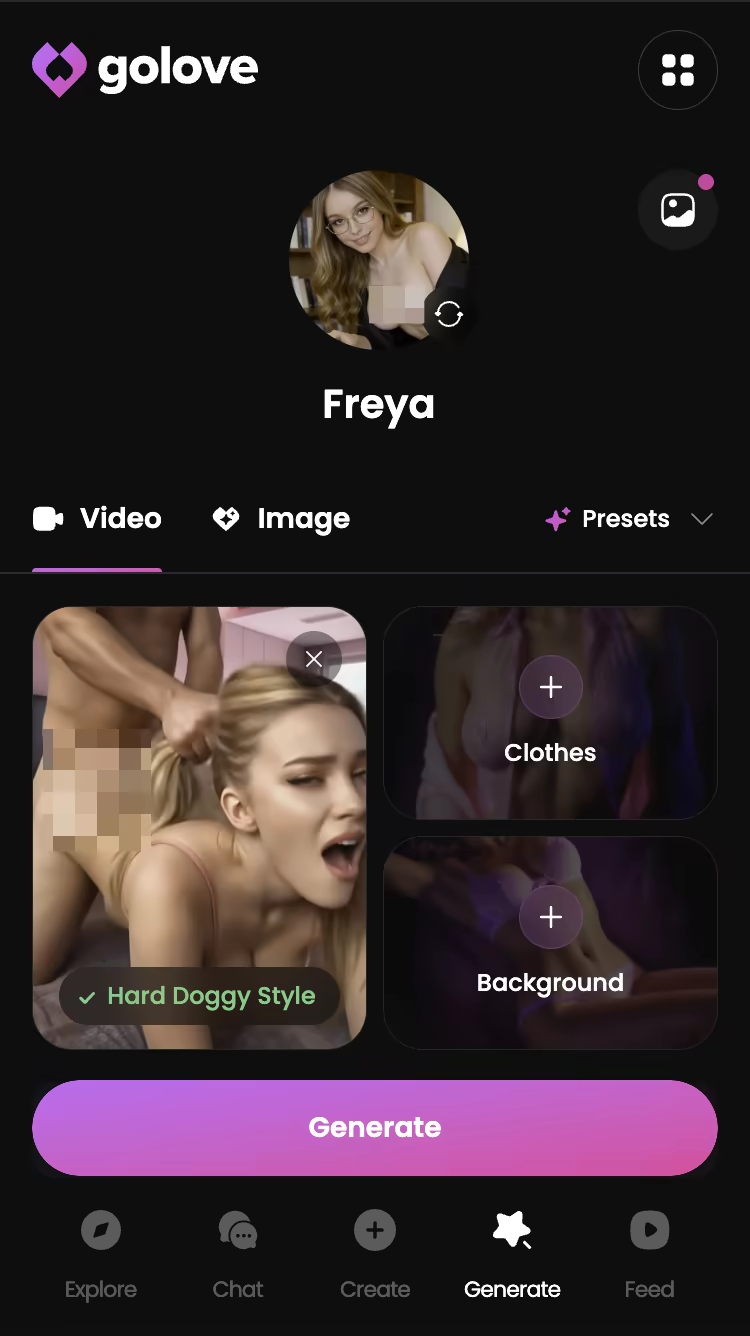
Then I ran that photo through Generate Video from Photo, picked an action, and got a clip back. Same girl, moving, in the scene we'd just written together.
Six broken panels versus one continuous character. It slaps, and it wasn't close.
The Verdict: GoLove Wins If You Want More Than a Panel
One line: comic generators sell you a picture, GoLove.ai sells you a character — and for anyone typing "ai hentai comics" hoping for something that doesn't fall apart by panel four, the character is the better buy.
- Get it if you want an anime AI girlfriend who persists — chat, photo requests that stay on-model, photo-to-video, memory, 300+ anime characters plus Design with AI for your own.
- Skip it if you specifically need an exportable comic page with panels and bubbles. GoLove doesn't make that file, and I'm not going to pretend otherwise.
- Start free either way: chat entry costs nothing, 2 Stars land daily, and PRO sits around $19.99/mo (approx, region- and promo-dependent) if you want the unlimited Feed.
Got a scene in your head right now — a specific girl, a specific moment? You can have her responding to you in under a minute instead of rerolling panels for forty. Build her, then ask her for the photo.
| What you get | GoLove.ai |
|---|---|
| Real-time voice calls | Yes — per-character voices |
| Memory across chats | Yes — remembers your details |
| In-chat image generation | Yes — 35 poses & 21 outfits |
| Daily reward stars | 2 every day |
Frequently Asked Questions
Related Articles

IA Hentai: What Actually Works in 2026
IA hentai: honest 2026 verdict — GoLove.ai wins with voice chat, memory, and photo-to-video. See what actually works, no fluff.

AI Uncensored Hentai: What Actually Works in 2026
AI uncensored hentai in 2026: GoLove wins with real in-chat photos, video generation, and memory — no email required. See what actually delivers.

AI Hentai GIF: What Actually Works in 2026
AI hentai gif tools loop and pixelate — GoLove.ai builds real hentai video with photo-to-video, memory, and chat. See it, instant-access.

AI Futa Hentai: What Actually Works in 2026
AI futa hentai, compared: GoLove.ai wins with a custom character creator, real chat memory, and photo-to-video — see why it beats static generators.
This article contains affiliate links. We may earn a commission at no extra cost to you if you sign up through our links. See how we test.